Saudi Aramco Profits Surge 26% as Strait of Hormuz Crisis Pushes Oil to $100 a Barrel

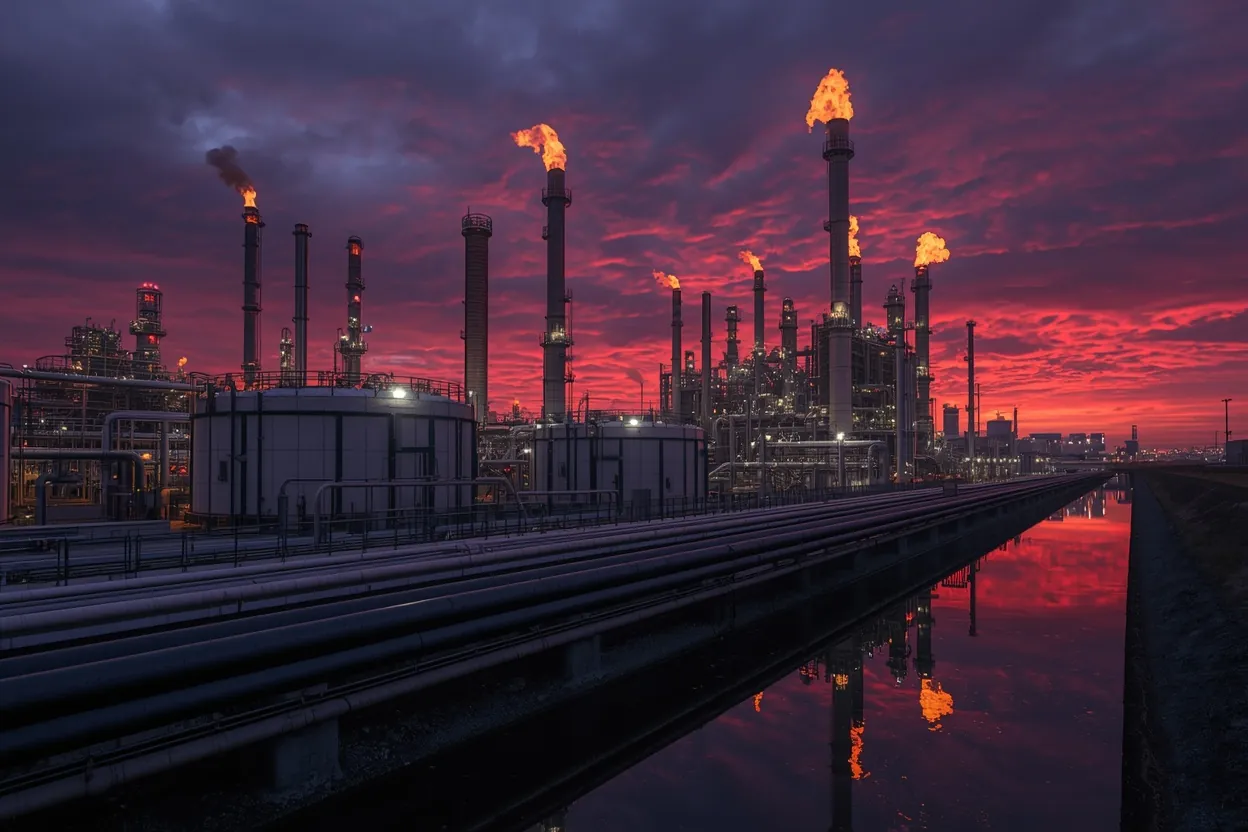
Saudi Aramco profits 2026 are making headlines, with a 26% jump in the first quarter. The state oil company's profits soared to $33.6bn, while revenue rose nearly 7% to $115.5bn. But why does this matter? The answer lies in the current geopolitical tensions and their impact on global energy markets.
The recent surge in Saudi Aramco profits 2026 is a notable development, especially considering the ongoing conflict in the Middle East. As the world's largest oil exporter, Saudi Arabia's energy sector is crucial to the global economy. So, what's driving this growth, and how will it affect consumers and economies worldwide?
Saudi Aramco Q1 2026 Profit Jump Explained
Saudi Aramco's 26% profit jump in Q1 2026 can be attributed to its east-west pipeline, which has allowed the company to ship millions of barrels of oil out of the Gulf despite the conflict. The pipeline, which has reached its maximum capacity of 7m barrels of oil per day, has proven to be a critical supply artery. That's where it gets interesting, as this development has helped mitigate the impact of the global energy shock and provided relief to customers affected by shipping constraints in the Strait of Hormuz.
From what's been reported so far, the east-west pipeline has been a critical asset for Saudi Aramco. It's hard to say exactly why the pipeline has been so successful, but it's clear that it's played an important role in the company's profit surge. The pipeline allows Saudi Aramco to ship oil from its east coast to the Red Sea port of Yanbu, bypassing the Strait of Hormuz. Yet, the company still faces challenges, including attacks on its infrastructure and a halt to exports through its Gulf ports.
How the Strait of Hormuz Blockade Changed Everything
The Strait of Hormuz blockade has triggered a spike in global energy prices, with Brent crude trading at about $100 a barrel, approximately 40% higher than before the conflict. The strait, through which about a fifth of the world's oil and gas supply normally passes, has been effectively closed since the start of the US-Iran war in late February. But what does this mean for global consumers and economies? It's not entirely clear yet, but one thing is certain: the blockade has had a considerable impact on the global energy market.
And that's not all - the blockade has also led to a surge in oil prices, which is affecting economies worldwide. The current oil price is a major concern for many countries, and it's hard to predict when it will come down. According to Amin Nasser, Saudi Aramco's president and chief executive, "If trade flows resume immediately or today through the Strait of Hormuz, it will take a few months for the oil market to rebalance." But if trade and shipping remain curtailed by more than a few weeks, the supply disruption will persist, and the market won't normalize until 2027.
Also Read
More Latest News stories →The East-West Pipeline: Aramco's Emergency Supply Route
Saudi Aramco's east-west pipeline has proven to be a vital supply route, allowing the company to maintain its oil exports despite the Strait of Hormuz blockade. The pipeline's maximum capacity of 7m barrels of oil per day has been reached, and it's playing a critical role in mitigating the impact of the global energy shock. What that means, practically speaking, is that Saudi Aramco can continue to supply oil to its customers, albeit through a different route.
On the flip side, the pipeline's success has also highlighted the company's ability to adapt to changing circumstances. It's a testament to Saudi Aramco's resilience and its commitment to maintaining its position as a leading oil exporter. Here's the thing: the pipeline is not a permanent solution, and the company will need to find ways to address the underlying issues affecting its oil exports.
What $100 Oil Means for Global Consumers and Economies
The current oil price of $100 a barrel is having a considerable impact on global consumers and economies. It's not just the oil price itself that's the problem; it's the ripple effect it has on the entire economy. To put that in perspective, higher oil prices can lead to increased costs for goods and services, which can, in turn, affect inflation and economic growth. But why does this matter? The answer is simple: it affects us all, from the consumer who fills up their car with gasoline to the business that relies on oil to operate.
So, what can be done to address the issue? That's not entirely clear yet, but one thing is certain: the situation needs to be monitored closely. Worth noting is that the oil price is not the only factor affecting the economy; there are many other variables at play. Yet, it's hard to ignore the impact that $100 oil is having on the global economy.
What Aramco's CEO Said About the Road Ahead
Amin Nasser, Saudi Aramco's president and chief executive, has warned that the continued blockade of the Strait of Hormuz would be a catastrophe for global oil markets. His comments come as the US awaits a response from Iran to its proposals for an interim deal to end the conflict. But what does this mean for the future of oil exports? It's hard to say exactly, but one thing is certain: the situation is complex, and there are many factors at play.
According to Nasser, "Our east-west pipeline, which reached its maximum capacity of 7m barrels of oil per day, has proven itself to be a critical supply artery, helping to mitigate the impact of a global energy shock and providing relief to customers affected by shipping constraints in the Strait of Hormuz." That's an important statement, and it highlights the importance of the pipeline in maintaining oil exports.
Saudi Arabia's Finances: Why Aramco's Dividend Matters So Much
Saudi Aramco's dividend is a critical component of Saudi Arabia's finances, with the government relying heavily on the company's payouts to fund domestic spending. The company has maintained its quarterly dividend at $21.9bn, following a 3.5% increase at the end of last year. But why does this matter? The answer is simple: Saudi Arabia's economy is heavily reliant on oil exports, and Aramco's dividend is a key contributor to the country's revenue.
It's worth noting that the Saudi government directly owns more than 80% of Saudi Aramco, while its sovereign investor, the Public Investment Fund, holds 16%. This means that the company's financial performance has a direct impact on the country's economy. And that's not all - the company's success is also crucial for the country's development plans, including its vision to diversify its economy and reduce its reliance on oil exports.
Key Takeaways
- Saudi Aramco's profits surged 26% in Q1 2026, driven by its east-west pipeline.
- The company's revenue rose nearly 7% to $115.5bn, despite challenges in the Middle East.
- The Strait of Hormuz blockade has triggered a spike in global energy prices, with Brent crude trading at $100 a barrel.
Frequently Asked Questions
Why did Saudi Aramco profits jump 26% in Q1 2026?
Saudi Aramco's profits jumped 26% in Q1 2026 due to its east-west pipeline, which allowed the company to ship millions of barrels of oil out of the Gulf despite the conflict.
What is the current oil price and why is Brent crude at $100 a barrel?
The current oil price is $100 a barrel, driven by the Strait of Hormuz blockade, which has triggered a spike in global energy prices.
How is the Strait of Hormuz blockade affecting global oil supply?
The Strait of Hormuz blockade is affecting global oil supply by limiting the amount of oil that can be shipped through the strait, leading to a surge in oil prices.
What is Aramco's east-west pipeline and how does it work?
Aramco's east-west pipeline is a critical supply artery that allows the company to ship oil from its east coast to the Red Sea port of Yanbu, bypassing the Strait of Hormuz.
Will oil prices come down if the Strait of Hormuz reopens?
It's hard to say exactly, but according to Amin Nasser, if trade flows resume immediately, it will take a few months for the oil market to rebalance.
How much dividend did Saudi Aramco pay in Q1 2026?
Saudi Aramco maintained its quarterly dividend at $21.9bn in Q1 2026.
Conclusion
Saudi Aramco profits 2026 are a notable development, driven by the company's east-west pipeline and the current geopolitical tensions. The surge in oil prices, triggered by the Strait of Hormuz blockade, is having a ripple effect on the global economy. But what does this mean for the future of oil exports? It's hard to say exactly, but one thing is certain: the situation is complex, and there are many factors at play.
As the world's largest oil exporter, Saudi Aramco's performance is crucial for the global economy. The company's ability to maintain its oil exports, despite the challenges in the Middle East, is a testament to its resilience. And that's where Saudi Aramco profits 2026 come in - a notable development that highlights the company's ability to adapt to changing circumstances and maintain its position as a leading oil exporter.
Marcus J. Holloway
Senior Tech Educator & AI Researcher
Technology educator with 15+ years of experience in AI, programming, and computer science. Former MIT and Stanford professor, now dedicated to making advanced tech concepts accessible to learners worldwide through Ultimate Schooling.
💬 Questions or Comments?
Have a question about this tutorial or want to share your thoughts? Leave a comment below!