NASA Celebrates 20 Years of Mars Reconnaissance Orbiter

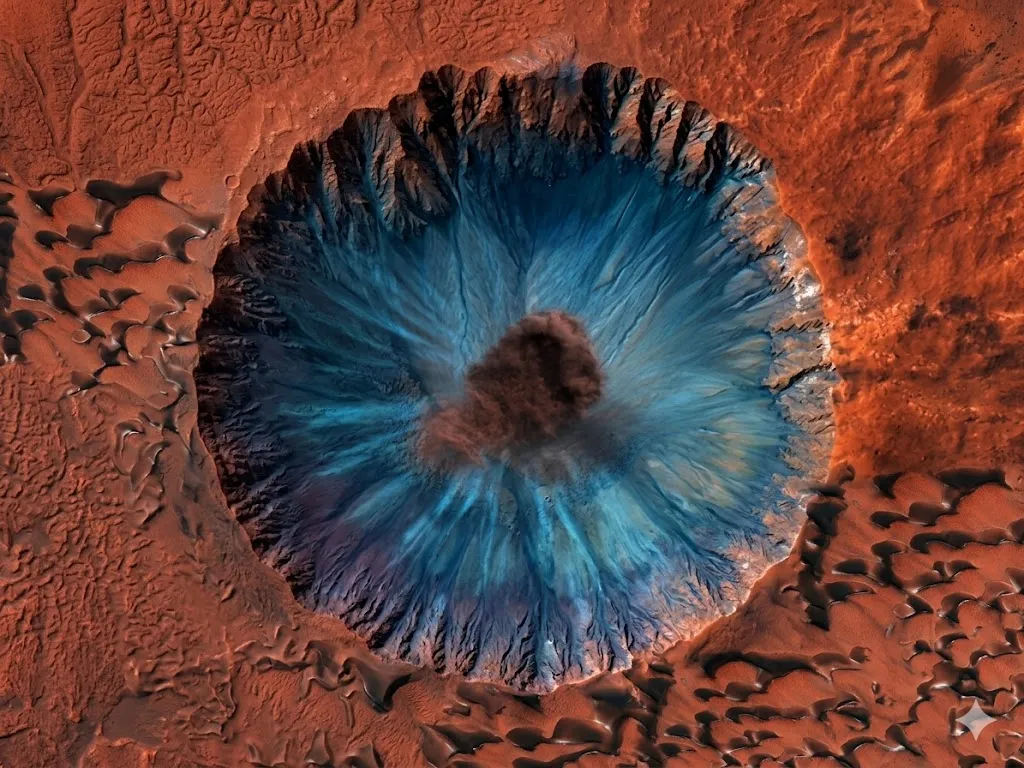
With over 20 years of operation, the NASA Mars Reconnaissance Orbiter (MRO) has been a cornerstone of Martian exploration, providing invaluable insights into the Red Planet's geology, climate, and potential habitability. As of 2023, the MRO has completed over 60,000 orbits around Mars, capturing more than 200,000 images and transmitting endless amounts of data back to Earth. The MRO's impact on our understanding of Mars cannot be overstated, and its contributions will continue to shape the future of space exploration.
The MRO's launch in 2005 marked a significant milestone in the exploration of Mars, and its initial mission duration of 2 years has been extended multiple times due to its exceptional performance. The orbiter's advanced suite of instruments, including the High Resolution Imaging Science Experiment (HiRISE) camera and the Context Camera (CTX), have enabled scientists to study the Martian surface in unprecedented detail. As we look back on the MRO's remarkable achievements, it's clear that its legacy will continue to inspire new generations of space explorers and scientists.
Table of Contents
The MRO's Instrument Suite and Mission Objectives
The MRO is equipped with a range of state-of-the-art instruments, each designed to address specific scientific objectives. The HiRISE camera, for example, has a resolution of 25-30 cm per pixel, allowing scientists to study the Martian surface in exquisite detail. The CTX camera, on the other hand, provides broader context with a resolution of 6 meters per pixel. By combining data from these instruments, scientists have been able to gain a deeper understanding of Martian geology and identify potential habitability zones.
The MRO's mission objectives have evolved over time, reflecting the ever-changing landscape of space exploration. Initially, the focus was on characterizing the Martian surface and identifying potential landing sites for future missions. As the mission progressed, however, the emphasis shifted towards studying the Martian atmosphere and searching for signs of water. This adaptability has allowed the MRO to remain a cornerstone of Martian exploration, even as new missions and technologies emerge.
Key Instrumentation and Capabilities
The MRO's instrument suite includes:
- High Resolution Imaging Science Experiment (HiRISE) camera: 25-30 cm per pixel resolution
- Context Camera (CTX): 6 meters per pixel resolution
- Compact Reconnaissance Imaging Spectrometer for Mars (CRISM): infrared and visible spectrometry
- Mars Climate Sounder (MCS): atmospheric temperature and pressure measurements
- Shallow Radar (SHARAD): subsurface radar sounding
Comparing the MRO to Other Mars Orbiters
The MRO is not the only orbiter to have explored Mars, but its unique combination of instruments and capabilities sets it apart from other missions. The following table provides a comparison of the MRO with other notable Mars orbiters:
| Orbiter | Launch Year | Instrument Suite | Resolution (m/pixel) |
|---|---|---|---|
| Mars Reconnaissance Orbiter (MRO) | 2005 | HiRISE, CTX, CRISM, MCS, SHARAD | 0.25-30 (HiRISE), 6 (CTX) |
| Mars Odyssey | 2001 | THEMIS, GRS, NS, HEND | 100 (THEMIS) |
| Mars Express | 2003 | HRSC, MARSIS, ASI, OMEGA | 10-20 (HRSC) |
| Mars 2020 Orbiter | 2020 | MOA, RIMFAX, MEDA | 1-2 (MOA) |
According to
, the MRO's contributions to Martian science have been invaluable. As we look to the future of Mars exploration, it's clear that the MRO will remain a vital component of our ongoing efforts to understand the Red Planet."The MRO has been a workhorse for Mars exploration, providing a wealth of data that has helped us better understand the Martian geology and climate."
— Dr. Maria Zuber, NASA Associate Administrator for the Science Mission Directorate
Also Read
More trending stories →The MRO's Legacy and Future Implications
The MRO's 20-year legacy is a testament to the power of dedicated space exploration. As we look to the future, it's clear that the MRO will continue to play a vital role in Martian science. With its advanced instrument suite and proven track record, the MRO is poised to support a range of upcoming missions, from the Mars 2020 Perseverance rover to the European Space Agency's ExoMars rover. By building on the MRO's successes, scientists and engineers can push the boundaries of space exploration and unlock new secrets of the Red Planet.
Key Takeaways
Key Takeaways
- The MRO has been in operation for over 20 years, providing invaluable insights into Martian geology and climate.
- The MRO's instrument suite includes a range of state-of-the-art tools, from the HiRISE camera to the SHARAD radar.
- The MRO has completed over 60,000 orbits around Mars, capturing more than 200,000 images and transmitting endless amounts of data back to Earth.
- The MRO's legacy will continue to shape the future of Mars exploration, with its advanced instrument suite and proven track record supporting a range of upcoming missions.
Frequently Asked Questions
What is the primary mission objective of the MRO?
The primary mission objective of the MRO is to characterize the Martian surface and identify potential habitability zones. This involves using a range of instruments to study the Martian geology, climate, and atmosphere, and to search for signs of water and potential biosignatures.
How long has the MRO been in operation?
The MRO has been in operation for over 20 years, with a launch date of August 12, 2005. The mission was initially designed to last for 2 years, but it has been extended multiple times due to its exceptional performance and the wealth of data it has provided.
What is the resolution of the MRO's HiRISE camera?
The HiRISE camera has a resolution of 25-30 cm per pixel, allowing scientists to study the Martian surface in exquisite detail. This high resolution has enabled the discovery of new geological features and potential habitability zones, and has provided valuable insights into the Martian geology and climate.
How does the MRO support future Mars missions?
The MRO provides critical support for future Mars missions, including the Mars 2020 Perseverance rover and the European Space Agency's ExoMars rover. By providing high-resolution imagery and precise navigation data, the MRO helps scientists and engineers to plan and execute these missions, and to unlock new secrets of the Red Planet.
What is the expected lifespan of the MRO?
The MRO is expected to remain in operation until at least 2025, although its exact lifespan will depend on a range of factors, including its power and fuel reserves and the performance of its instruments. As the MRO continues to provide valuable data and support for future Mars missions, it's clear that its legacy will endure for many years to come.
Conclusion
As we celebrate the 20-year anniversary of the MRO, it's clear that this remarkable spacecraft has left an indelible mark on Martian science. With its advanced instrument suite, proven track record, and continued support for future missions, the MRO will remain a vital component of Mars exploration for years to come. As we look to the future of space exploration, it's essential that we build on the MRO's successes and push the boundaries of what is possible. By doing so, we can unlock new secrets of the Red Planet and inspire new generations of space explorers and scientists.
Marcus J. Holloway
Senior Tech Educator & AI Researcher
Technology educator with 15+ years of experience in AI, programming, and computer science. Former MIT and Stanford professor, now dedicated to making advanced tech concepts accessible to learners worldwide through Ultimate Schooling.
💬 Questions or Comments?
Have a question about this tutorial or want to share your thoughts? Leave a comment below!