China’s New H-20 Strategic Stealth Bomber Has 1 Flaw That Might Not Be Easy to Fix

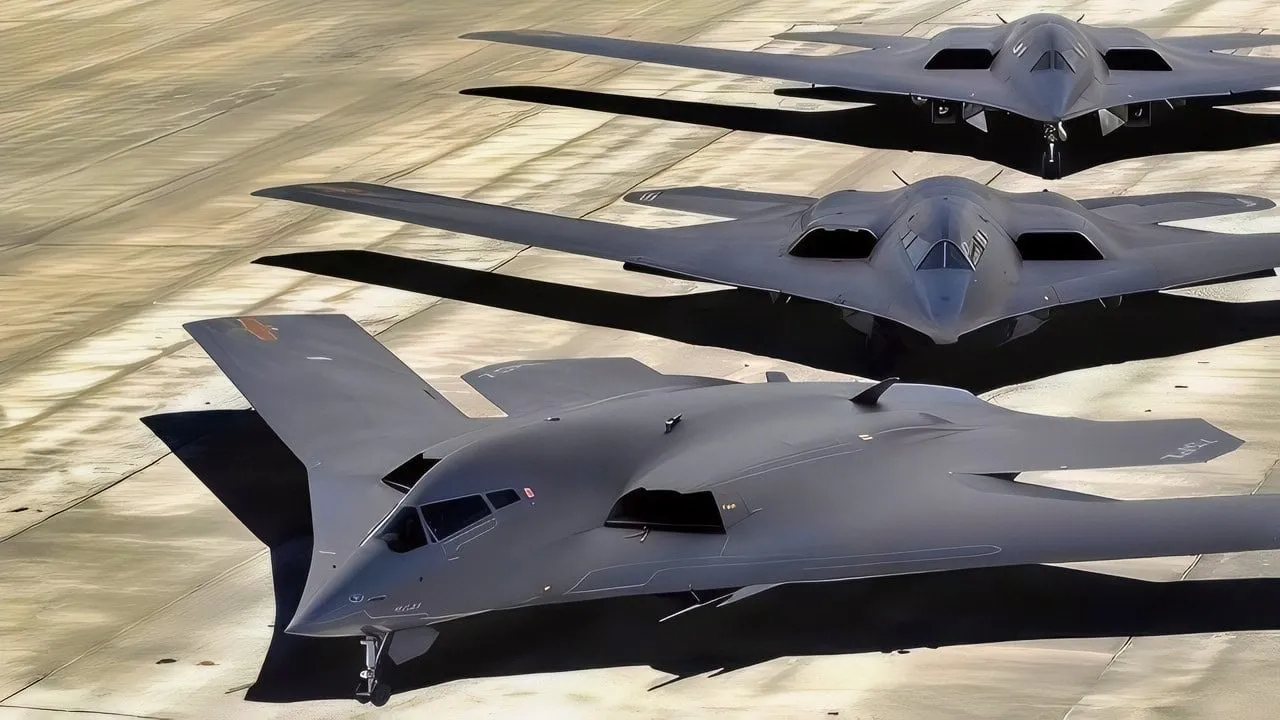
What if China's new H-20 strategic stealth bomber, touted as a major breakthrough in the country's military modernization, has a flaw that could undermine its entire operational concept? The H-20, with its estimated range of 5,000 miles and ability to carry 45 tons of payload, is a significant milestone in China's efforts to develop a long-range strategic bomber capability. However, as we explore the aircraft's design and capabilities, a critical question arises: can the H-20's limited satellite communication system support its intended role as a strategic bomber?
The China H-20 bomber is a next-generation aircraft designed to provide China with a global reach and enhanced deterrence capabilities. With its advanced stealth features and state-of-the-art avionics, the H-20 is poised to become a key component of China's military strategy. However, the aircraft's communication systems may not be able to support the high-speed data transmission required for real-time targeting and mission planning. This limitation could significantly impact the H-20's effectiveness in a real-world conflict scenario.
Table of Contents
Introduction to the China H-20 Bomber
The China H-20 bomber is a strategic stealth bomber designed to provide China with a long-range strike capability. With its estimated top speed of Mach 2 and service ceiling of 40,000 feet, the H-20 is a highly advanced aircraft that is designed to evade detection and deliver precision-guided munitions. The H-20's advanced materials and design make it a highly survivable aircraft that can withstand the stresses of high-speed flight.
The H-20 is also equipped with advanced avionics, including a phased array radar system and a advanced electronic warfare system. These systems provide the H-20 with a high level of situational awareness and enable it to detect and engage targets at long range. However, the H-20's communication systems may not be able to support the high-speed data transmission required for real-time targeting and mission planning.
Design and Development
The H-20 is a indigenous Chinese design that was first unveiled in 2019. The aircraft is powered by four WS-18 engines and has a length of 108 feet. The H-20's wingspan is 131 feet and it has a maximum takeoff weight of 230,000 pounds. The aircraft is equipped with a advanced fly-by-wire system and a glass cockpit.
Comparison with Other Strategic Bombers
The H-20 is a strategic stealth bomber that is designed to provide China with a long-range strike capability. The H-20 is comparable to other strategic bombers such as the B-2 Spirit and the B-21 Raider. The following table compares the key specifications of these aircraft:
| Aircraft | Length | Wingspan | Maximum Takeoff Weight | Range |
|---|---|---|---|---|
| H-20 | 108 feet | 131 feet | 230,000 pounds | 5,000 miles |
| B-2 Spirit | 107 feet | 172 feet | 336,500 pounds | 6,000 miles |
| B-21 Raider | 146 feet | 140 feet | 300,000 pounds | 5,500 miles |
As can be seen from the table, the H-20 has a similar range and payload capacity to the B-2 Spirit and the B-21 Raider. However, the H-20's communication systems may not be able to support the high-speed data transmission required for real-time targeting and mission planning.
Also Read
More trending stories →Expert Insights and Analysis
According to experts in the field, the H-20's limited satellite communication system could significantly impact its effectiveness in a real-world conflict scenario.
"The H-20's communication systems are not designed to support the high-speed data transmission required for real-time targeting and mission planning. This limitation could significantly impact the aircraft's ability to engage targets and achieve its intended mission objectives."
— Dr. Andrew Erickson, Professor of Strategy at the U.S. Naval War College
The H-20's communication systems are a critical component of its operational concept. The aircraft is designed to operate in a network-centric environment and to receive real-time targeting data from satellite-based sensors. However, the H-20's communication systems may not be able to support the high-speed data transmission required for real-time targeting and mission planning.
Key Features and Capabilities
The H-20 has a number of advanced features and capabilities that make it a highly effective strategic bomber. Some of the key features and capabilities of the H-20 include:
- Advanced stealth design that provides a low radar cross-section and enables the aircraft to evade detection
- Phased array radar system that provides a high level of situational awareness and enables the aircraft to detect and engage targets at long range
- Advanced electronic warfare system that provides a high level of protection against electronic countermeasures and enables the aircraft to operate in a hostile environment
- Ability to carry a variety of precision-guided munitions, including cruise missiles and smart bombs
- Advanced avionics and flight control systems that provide a high level of automation and enable the aircraft to operate with a high degree of precision
Key Takeaways
- The H-20 is a strategic stealth bomber designed to provide China with a long-range strike capability
- The aircraft has a limited satellite communication system that may not be able to support the high-speed data transmission required for real-time targeting and mission planning
- The H-20 has a number of advanced features and capabilities that make it a highly effective strategic bomber, including a phased array radar system and an advanced electronic warfare system
- The aircraft's communication systems are a critical component of its operational concept and may require significant upgrades to support its intended mission objectives
Frequently Asked Questions
What is the range of the H-20 bomber?
The H-20 bomber has an estimated range of 5,000 miles, which makes it a long-range strategic bomber. The aircraft is designed to operate at high altitudes and to deliver precision-guided munitions against targets at long range.
What is the payload capacity of the H-20 bomber?
The H-20 bomber has a payload capacity of 45 tons, which makes it a highly capable strategic bomber. The aircraft is designed to carry a variety of precision-guided munitions, including cruise missiles and smart bombs.
What is the top speed of the H-20 bomber?
The H-20 bomber has an estimated top speed of Mach 2, which makes it a highly advanced aircraft. The aircraft is designed to operate at high speeds and to deliver precision-guided munitions against targets at long range.
What is the service ceiling of the H-20 bomber?
The H-20 bomber has a service ceiling of 40,000 feet, which makes it a highly capable strategic bomber. The aircraft is designed to operate at high altitudes and to deliver precision-guided munitions against targets at long range.
What are the implications of the H-20 bomber's limited satellite communication system?
The H-20 bomber's limited satellite communication system may have significant implications for its effectiveness in a real-world conflict scenario. The aircraft's communication systems are a critical component of its operational concept and may require significant upgrades to support its intended mission objectives.
Conclusion
The China H-20 bomber is a highly advanced strategic bomber that is designed to provide China with a long-range strike capability. However, the aircraft's limited satellite communication system may have significant implications for its effectiveness in a real-world conflict scenario. To fully realize the potential of the H-20 bomber, China will need to invest in significant upgrades to its communication systems. With its advanced stealth design, phased array radar system, and advanced electronic warfare system, the H-20 bomber has the potential to be a highly effective strategic bomber. However, its limited communication capabilities may limit its effectiveness in certain scenarios. As the global security landscape continues to evolve, the H-20 bomber is likely to play a critical role in China's military strategy, and its communication systems will be a key factor in determining its overall effectiveness.
Marcus J. Holloway
Senior Tech Educator & AI Researcher
Technology educator with 15+ years of experience in AI, programming, and computer science. Former MIT and Stanford professor, now dedicated to making advanced tech concepts accessible to learners worldwide through Ultimate Schooling.
💬 Questions or Comments?
Have a question about this tutorial or want to share your thoughts? Leave a comment below!