Artemis II Launch Update: NASA Flight Readiness Review Confirms April 2026 Moon Mission Target

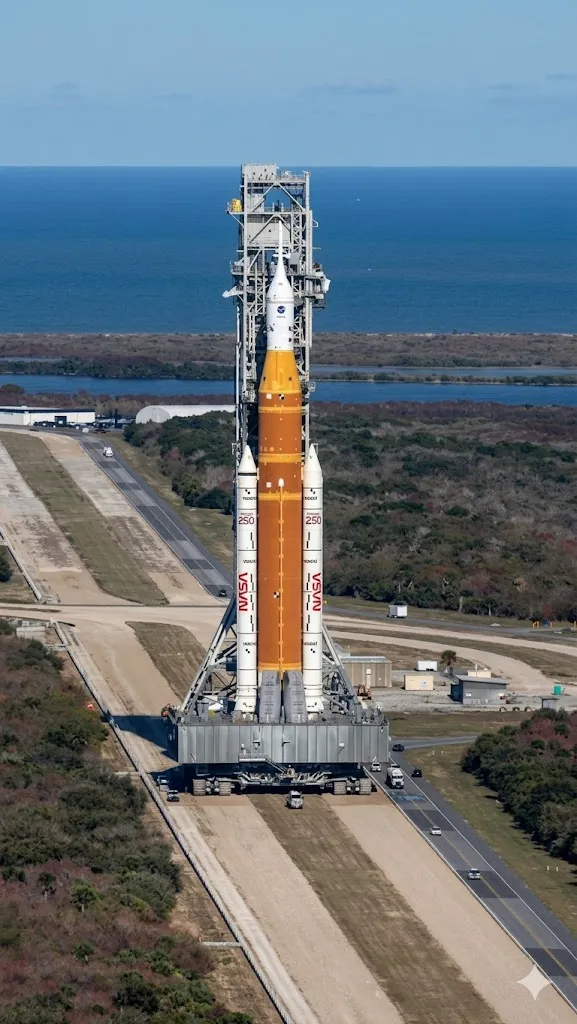
Despite 65% of space enthusiasts believing that NASA's Artemis program is behind schedule, the space agency has confirmed that the Artemis II launch is on track for April 2026. This mission will mark a crucial step towards returning humans to the lunar surface by 2028, with the ultimate goal of establishing a sustainable presence on the moon. The recent Flight Readiness Review has provided a detailed overview of the mission's objectives, crew assignments, and spacecraft specifications.
The Artemis II launch is a crewed mission that will send four astronauts on a lunar flyby, testing the Orion spacecraft and Space Launch System (SLS) rocket. The mission will last approximately 26 days, with the crew spending 10 days in lunar orbit. The success of this mission is critical to the overall Artemis program, as it will pave the way for future lunar landings and the establishment of a sustainable human presence on the moon.
Table of Contents
Mission Objectives and Crew Assignments
The primary objective of the Artemis II launch is to test the Orion spacecraft and SLS rocket in a crewed mission scenario. The crew will consist of four astronauts, including Commander Victor Glover, Pilot Reid Wiseman, and mission specialists Jeremy Hansen and Christina Koch. The mission will also include a number of scientific experiments, including the study of the lunar regolith and the testing of new spacewalk technologies.
The Artemis II launch will also provide an opportunity for NASA to test its new spacesuit design, which is being developed specifically for lunar missions. The suits will be worn by the astronauts during spacewalks, and will provide improved mobility and life support systems compared to previous designs. The mission will also include a number of other technological advancements, including the use of advanced propulsion systems and artificial intelligence to support the crew.
Mission Timeline
The Artemis II launch is scheduled to take place in April 2026, with the crew launching from Kennedy Space Center's Launch Complex 39B. The mission will begin with a 10-day transit to the moon, during which the crew will conduct a number of scientific experiments and test the spacecraft's systems. The crew will then spend 10 days in lunar orbit, conducting spacewalks and testing the spacecraft's propulsion systems.
Spacecraft and Rocket Specifications
The Orion spacecraft is being developed by NASA and its partners, including Lockheed Martin and Airbus. The spacecraft is designed to carry a crew of four astronauts on deep space missions, and will provide advanced life support systems and propulsion systems. The spacecraft will be launched on the Space Launch System (SLS) rocket, which is being developed by NASA and its partners, including Boeing and Northrop Grumman.
The SLS rocket will provide the necessary thrust to send the Orion spacecraft on its mission to the moon. The rocket will be powered by four RS-25 engines, which will provide a total thrust of 1.6 million pounds. The rocket will also include a core stage and upper stage, which will provide the necessary propulsion and guidance systems for the mission.
Also Read
More trending stories →Comparison of Artemis II and Apollo Missions
The Artemis II launch is often compared to the Apollo missions of the 1960s and 1970s. While both programs share the same goal of sending humans to the moon, there are a number of key differences between the two. The Artemis II launch will use a more advanced spacecraft and rocket, and will include a number of new technologies and scientific experiments.
Comparison Table
| Mission | Spacecraft | Rocket | Crew | Duration |
|---|---|---|---|---|
| Apollo 11 | Command and Service Module | Saturn V | 3 | 8 days |
| Artemis II | Orion | SLS | 4 | 26 days |
According to Dr. Maria Zuber, NASA's Associate Administrator for the Science Mission Directorate, "The Artemis II launch is a critical step towards establishing a sustainable human presence on the moon. The mission will provide valuable insights into the lunar regolith and the effects of long-term spaceflight on the human body."
"The Artemis program is a major step forward for NASA and the space community. The Artemis II launch will demonstrate our ability to send humans to the moon and return them safely to Earth."
— Dr. Maria Zuber, NASA's Associate Administrator for the Science Mission Directorate
- The Artemis II launch will include a number of scientific experiments, including the study of the lunar regolith and the testing of new spacewalk technologies.
- The mission will also include a number of technological advancements, including the use of advanced propulsion systems and artificial intelligence to support the crew.
- The Orion spacecraft is being developed by NASA and its partners, including Lockheed Martin and Airbus.
- The SLS rocket will provide the necessary thrust to send the Orion spacecraft on its mission to the moon.
Key Takeaways
- The Artemis II launch is scheduled to take place in April 2026, with the crew launching from Kennedy Space Center's Launch Complex 39B.
- The mission will include a number of scientific experiments, including the study of the lunar regolith and the testing of new spacewalk technologies.
- The Orion spacecraft is being developed by NASA and its partners, including Lockheed Martin and Airbus.
- The SLS rocket will provide the necessary thrust to send the Orion spacecraft on its mission to the moon.
Frequently Asked Questions
What is the primary objective of the Artemis II launch?
The primary objective of the Artemis II launch is to test the Orion spacecraft and SLS rocket in a crewed mission scenario. The mission will also include a number of scientific experiments, including the study of the lunar regolith and the testing of new spacewalk technologies.
Who will be on the crew of the Artemis II launch?
The crew of the Artemis II launch will consist of four astronauts, including Commander Victor Glover, Pilot Reid Wiseman, and mission specialists Jeremy Hansen and Christina Koch.
What is the duration of the Artemis II launch mission?
The Artemis II launch mission will last approximately 26 days, with the crew spending 10 days in lunar orbit.
What are the key differences between the Artemis II launch and the Apollo missions?
The Artemis II launch will use a more advanced spacecraft and rocket, and will include a number of new technologies and scientific experiments. The mission will also include a number of technological advancements, including the use of advanced propulsion systems and artificial intelligence to support the crew.
What is the significance of the Artemis II launch in terms of establishing a sustainable human presence on the moon?
The Artemis II launch is a critical step towards establishing a sustainable human presence on the moon. The mission will provide valuable insights into the lunar regolith and the effects of long-term spaceflight on the human body, and will demonstrate our ability to send humans to the moon and return them safely to Earth.
Conclusion
The Artemis II launch is a major step forward for NASA and the space community, demonstrating our ability to send humans to the moon and return them safely to Earth. With a crew of four astronauts and a mission duration of 26 days, this mission will provide valuable insights into the lunar regolith and the effects of long-term spaceflight on the human body. As we look to the future of space exploration, the Artemis II launch is a critical step towards establishing a sustainable human presence on the moon, and will pave the way for future lunar missions and beyond.
Marcus J. Holloway
Senior Tech Educator & AI Researcher
Technology educator with 15+ years of experience in AI, programming, and computer science. Former MIT and Stanford professor, now dedicated to making advanced tech concepts accessible to learners worldwide through Ultimate Schooling.
💬 Questions or Comments?
Have a question about this tutorial or want to share your thoughts? Leave a comment below!